It knows what a document is.
A contract, a policy, an invoice, a draft that was superseded two quarters ago. An assistant can tell you a clause is no longer in force instead of quoting it back to you.

Everything below runs inside your instance. No document, query or label is sent to Listening Post or to an outside model provider.
See it with your toolsEvery tool here reads the same context through the same open interface, and none of them can write to anything.
Pick one and see what connecting it involves.
Innovation is arriving faster than most procurement cycles close. The tool your team wants in six months may not exist yet.
Keep your context in one place and adopting it takes an afternoon.
Connects over MCP and reads as the person asking. Nothing is copied into the tool, and nothing is left behind when you stop using it.
753 skills are written for it. Each is a procedure that names its sources and says what it will not do. Install the file and ask in plain words.
Connect it over MCP and it opens on what your company already knows instead of an empty window.
The 753 skills ship in a Codex format too. Write a procedure once and it follows your team to whatever they use next.
Point it at the engine over MCP and it answers from your company instead of from the open web.
All 753 skills, with the same sources and the same limits. Nothing it connects to can be written to.
An agent harness that connects over MCP and keeps its working memory in the engine rather than inside the tool.
Hand the same task to a different harness next month and the context is already there.
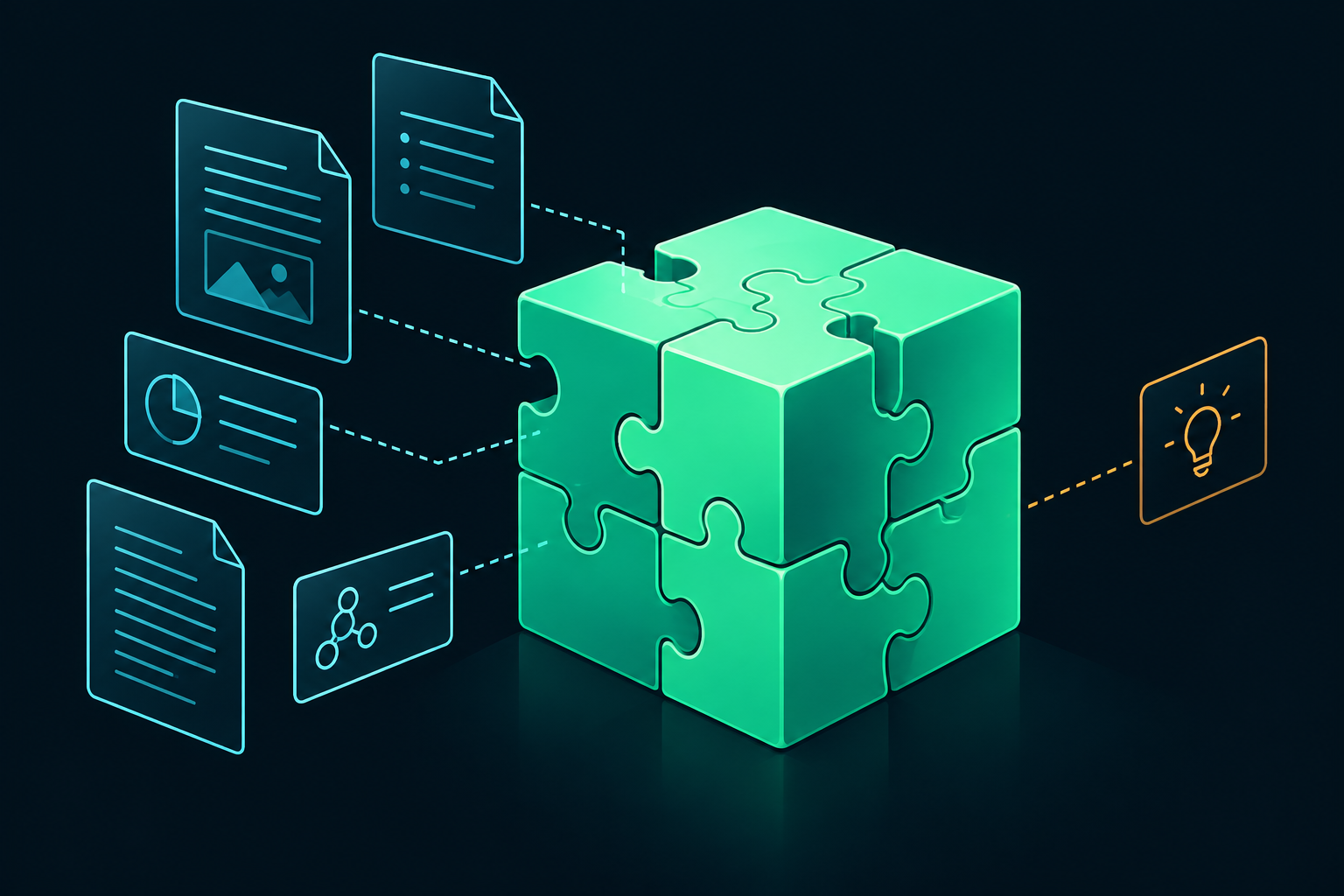
Most search tools can find a document that looks like a match. They cannot tell you what it is, whether it is still current, or whether the person asking should be seeing it at all.
Listening Post answers those three questions the first time it reads a document, and the answers come back with every result.
A contract, a policy, an invoice, a draft that was superseded two quarters ago. An assistant can tell you a clause is no longer in force instead of quoting it back to you.
Credentials, account numbers and personal identifiers are caught by rules that do not guess and do not change their mind between runs. Similarity search has no such rule. That is how a live key ends up in a summary.
Every judgment carries a confidence score, and a search reports what it could not reach instead of implying it does not exist. An assistant that cannot express doubt will invent the answer, and it will sound sure.
Model Context Protocol gives compatible models, agents and tools a common way to reach external context. Listening Post uses that interface, so any compatible tool reads from the same engine.
Nothing moves. The context stays where it is and the new tool connects to it.
Containers on any Linux host, in your cloud or your own building. Sizing depends on how much you connect and how fast you want the first pass done. A pilot settles it.
No. Everything the engine needs to understand your documents runs inside your instance. No content, query or telemetry leaves it, and nothing requires outbound access to work.
Yes. The same product runs on premises. In an air-gapped setup, the models, agents and other systems it uses must operate within your permitted network.
A live pilot in your environment, your systems connected, your security team asking the hard questions.